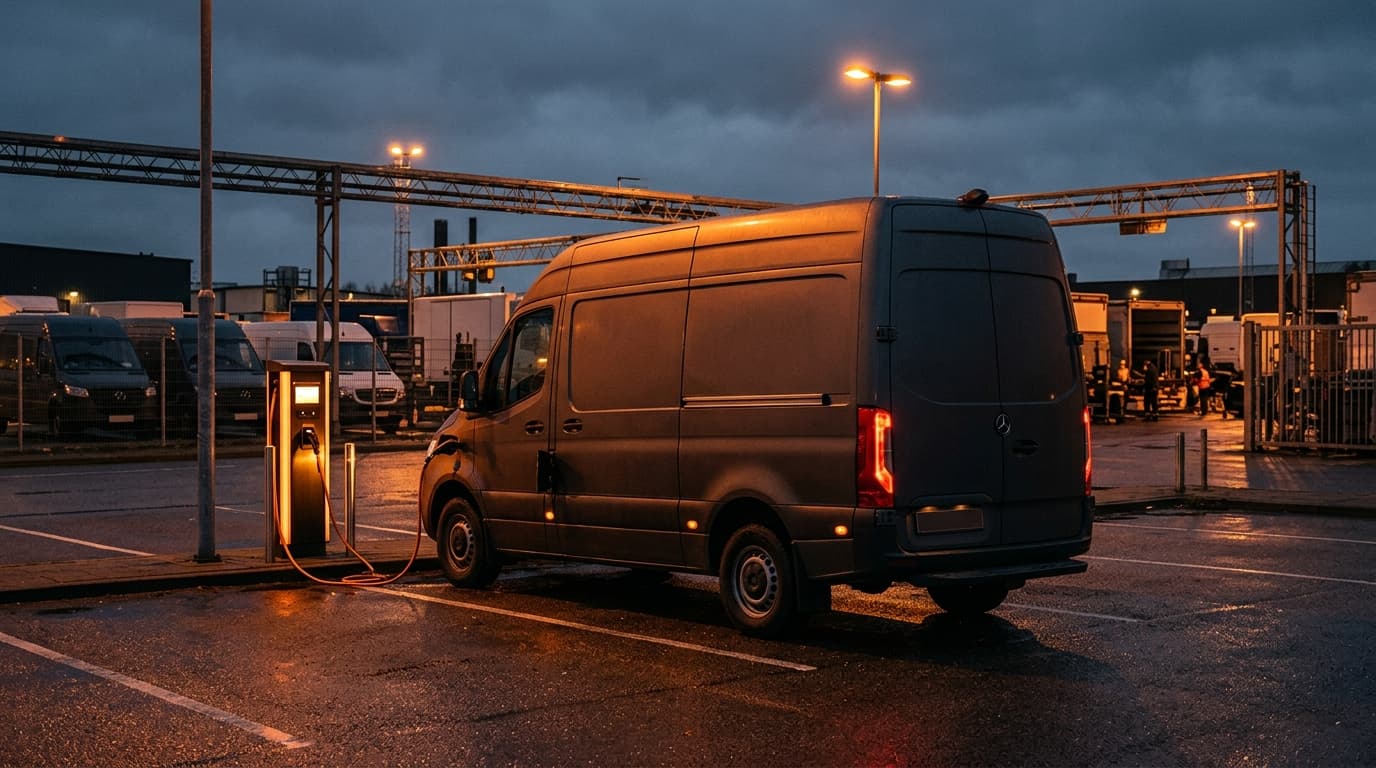
Yes, but not for everyone. As of October 2026, a category B licence lets you drive an electric or hydrogen van of 3,500 to 4,250 kg only within the federal pilot, extended to 26 November 2027: licence held for two years, no trailer, and an employer in haulage and logistics registered with the FPS Mobility. Everyone else waits for the EU rule.
Why does an electric van go over 3.5 tonnes?
The battery. That's all.
Take a large diesel van with a maximum authorised mass (MAM) of 3,500 kg that carries 1,200 kg: it weighs 2,300 kg empty. Its electric version carries several hundred kilos of battery on top. With 750 kg of extra mass, it would weigh 3,050 kg empty and keep only 450 kg of payload under the 3.5 t ceiling. Approved at 4,250 kg, it gets its 1,200 kg back. Not one kilo more: the decree forbids any payload above that of the equivalent conventional vehicle.
These figures are a worked example, not a model's spec sheet. The principle is the one I watched kill electrification projects in fleets: an electric van that carries 450 kg cannot replace a diesel that carries 1,200, and the workshop manager knows it before the test drive.
Who is allowed to drive one today?
The legal basis is the Royal Decree of 16 April 2023, published in the Belgian Official Gazette on 21 August 2023 and in force since 1 September 2023. Planned for three years, it was due to lapse at the end of August 2026. A Royal Decree of 24 June 2026 extended it to 26 November 2027, according to the summary published by the Vias institute on 3 August 2026.
There are five conditions, and every one counts:
- a category B licence issued at least two years ago;
- an electric or hydrogen vehicle with a MAM between 3,500 and 4,250 kg;
- goods transport, without a trailer;
- extra mass due solely to the propulsion system, with no payload gain over the combustion model;
- a driver employed by, or made available to, a company established in Belgium whose business is road haulage and logistics, registered with the FPS Mobility and Transport.
That last line rules out most readers of this site. Moniteur Automobile also mentions an entry route for a company with at least nine vehicles registered in its name; I could not find it in the 2023 text, and the 2026 summary only mentions the extension. If your case depends on it, get written confirmation from the FPS before you order.
Eight situations, eight answers
| Situation, electric van of 3,501 to 4,250 kg | B licence enough? | What to do |
|---|---|---|
| Employed driver of a logistics company in the pilot, B licence for 3 years | Yes | Vehicle participation certificate, reporting to the FPS |
| Same driver, B licence for 18 months | No | Wait for the two years, or C1 licence |
| Same vehicle, towing a trailer | No | C1E licence |
| Self-employed tradesperson, plumber or joiner | No | C1 licence until 26 November 2027 |
| Private buyer of a large electric van | No | C1 licence |
| 4,200 kg hydrogen van in a registered company | Yes for the licence | Tachograph: the exemption covers electric motors |
| Motorhome or converted camper of 4,250 kg | No | C1 licence; separate EU regime for motor caravans |
| Electric van approved at 3,500 kg | Yes, always | Nothing: it is an ordinary van |
The last line matters more than it looks. Most electric city vans and medium vans in the electric van ranking stay under 3.5 t and need no exemption at all.
How do you join the pilot, step by step?
The process runs at company level, not driver level. Allow a few weeks between the decision and the first trip, while the FPS replies.
- Check the company's purpose. The articles of association must cover road haulage and logistics. Without that, stop here.
- Check the vehicle. On the registration certificate, the MAM does not exceed 4,250 kg, the drivetrain is electric or hydrogen, and the model appears on the list published by the FPS Mobility.
- Register with the FPS Mobility and Transport, with the articles of association, and obtain a participation certificate for each vehicle.
- Check the licences. Note the date each driver's category B was issued. Two full years, no exceptions.
- Unhitch. No trips with a trailer under the pilot.
- Set up the reporting. Vehicle type, kilometres, number of trips, urban or not, replacement of a combustion van or addition, accidents: this anonymised data goes to the FPS, every six months according to Moniteur Automobile.
Common mistake: assuming the tachograph exemption comes automatically with the licence. It has its own conditions, covered in the next section.
Which truck rules still apply?
Above 3.5 t, the van is a category N2 vehicle. The B licence does not change that, and that is where the surprises come from.
| Obligation above 3.5 t | Brussels | Wallonia | Flanders |
|---|---|---|---|
| Speed limiter set at 90 km/h (N2) | Yes | Yes | Yes |
| Tachograph and driving times | Exempt if pilot, electric, within 100 km | Same | Same |
| Viapass kilometre charge | Yes | Yes | Temporary exemption for zero-emission vehicles reported |
| Signs banning vehicles over 3.5 t | Yes | Yes | Yes |
The tachograph first. The Royal Decree of 7 March 2025, in force since 19 March 2025, exempts pilot vehicles that are electric, weigh 4.25 t or less and stay within 100 km of the company's base from the device and from driving and rest time rules, according to the FPS Mobility. The Digitach list of derogations dated August 2026 carries it to 26 November 2027. Beyond 100 km, you are back under the regime set out in our guide to tachographs in vans.
Then the toll. Any van above 3.5 t pays the kilometre charge in all three Regions; in Flanders, it replaces road tax between 3.5 and 12 t. Moniteur Automobile reports a temporary exemption for zero-emission vehicles in Flanders, not available in Brussels or Wallonia. I could not find its end date: check the rate on Viapass before working out a cost per kilometre.
And after 26 November 2027?
The rule goes European. Directive (EU) 2025/2205 of 22 October 2025, published in the Official Journal on 5 November 2025, opens alternative-fuel vehicles above 3,500 kg and up to 4,250 kg to anyone who has held a B licence for two years. Goods and passengers, no training to drive solo. Belgium has announced the amendment of its 1998 Royal Decree for 26 November 2027, the deadline set for Member States.
Until then, a tradesperson who wants a large 4.25 t electric van has two options: take the C1 licence, or choose a version approved at 3.5 t and live with its payload. A fleet manager should above all avoid buying a 4.25 t vehicle today for a driver who has not held a licence for two years.
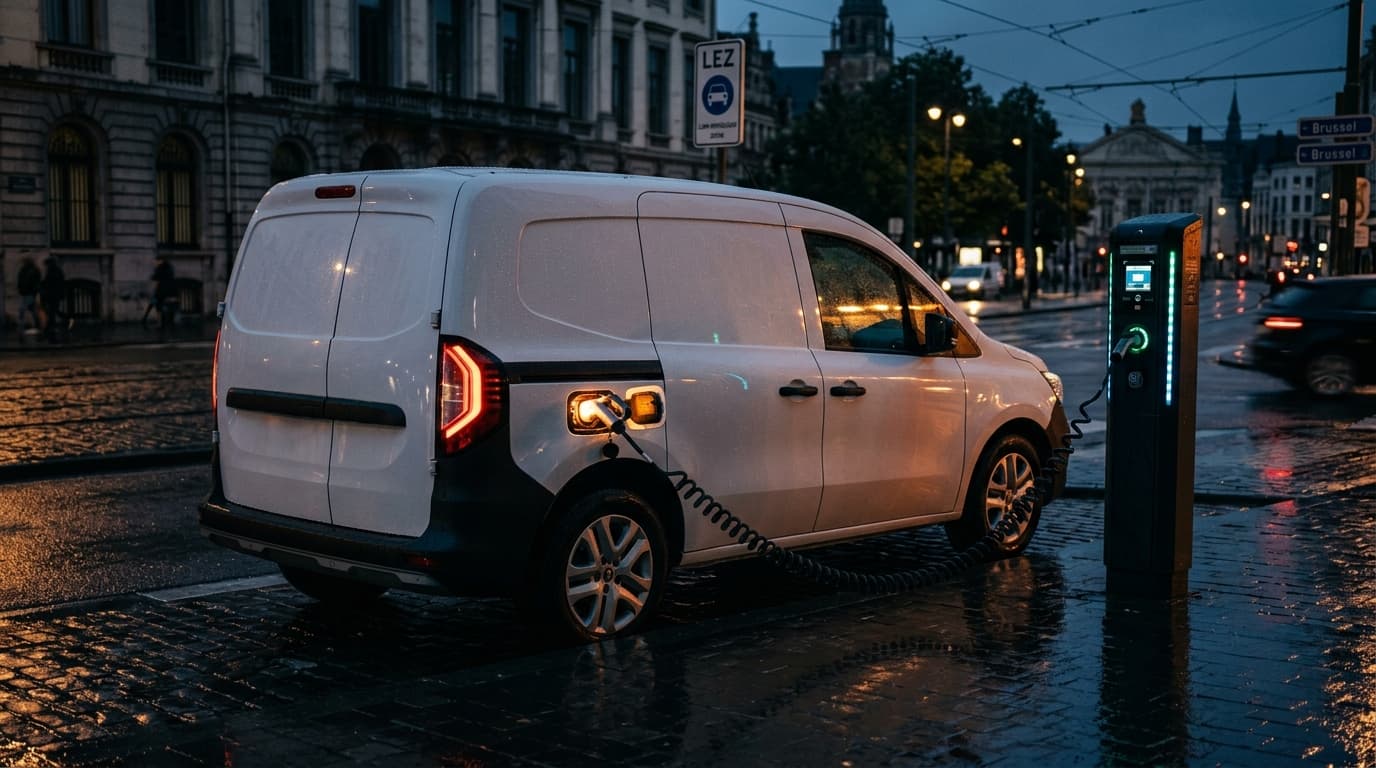
The Iveco eDaily and other 4.25 t large vans
Mostly large electric vans and chassis cabs. The Iveco eDaily, for example, is offered in 3.5, 3.8 and 4.25 t versions on single rear wheels, according to the manufacturer's presentation reported by electrive. The 4.25 t version can only be driven on a B licence under the conditions above.
Sources: Royal Decree of 16 April 2023 on driving licences for hydrogen or electric vans (Belgian Official Gazette, 21 August 2023); Vias institute, new driving licence rules for vans, trucks, buses and coaches, 3 August 2026; FPS Mobility and Transport, electric vans: two new temporary derogations, 31 March 2025; Flemish Tax Administration, kilometre charge for heavy goods vehicles; Moniteur Automobile, articles by Piet Andries (12 December 2023) and Olivier Grygs; electrive, Iveco eDaily presentation, 23 September 2022; Directive (EU) 2025/2205 of 22 October 2025. Pages accessed on 18 October 2026. This article is for information and does not replace the FPS Mobility's advice on a specific case.
Utilitaires électriques comparator
Compare all utilitaires électriques side by side.
Compare now →
Frequently asked questions

Damien, 44 ans, a géré pendant douze ans la flotte d'utilitaires d'une PME de second œuvre dans la région de Namur : achats, entretien, revente, et les galères de carrosserie qui vont avec. Il a vu passer des dizaines de Trafic, Transporter et Master, et il sait ce qui casse, ce qui se revend bien et ce qui coûte cher à l'usage. Il a lancé ce site pour comparer les utilitaires sur ce qui compte vraiment en Belgique : charge utile réelle, volume utile, TVA récupérable et coût au kilomètre — pas la brochure du concessionnaire.