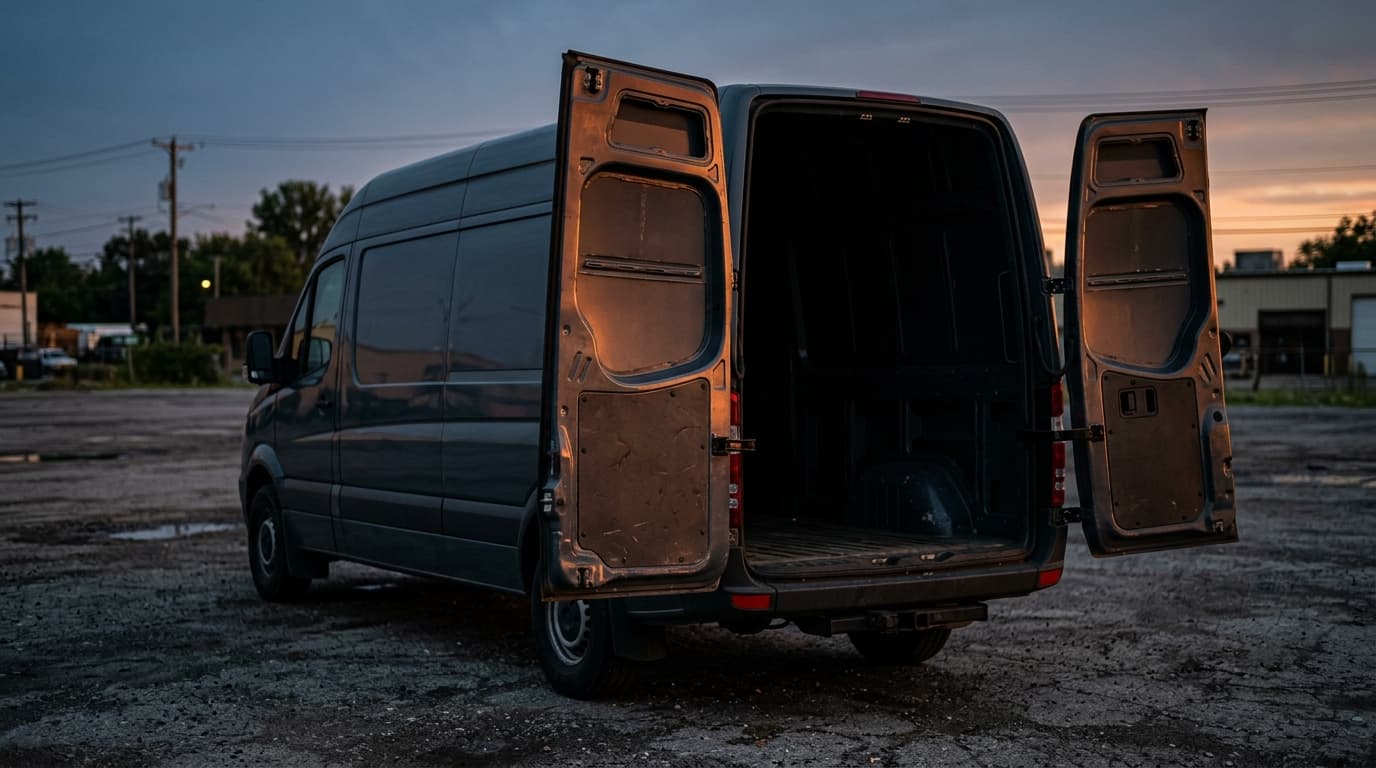
To convert a van in Belgium, the most rational base remains a Fiat Ducato L2H2 — or its twin the Peugeot Boxer, Citroën Jumper, Opel Movano. Its near-vertical walls and 1,932 mm of interior height let you sleep crosswise and stand up, something a Ford Transit or a Mercedes Sprinter L2H2 does not offer as easily.
Which van to convert, in short?
Take a Ducato, Boxer, Jumper or Movano in L2H2 if you want the crosswise bed and the most volume per metre of length. Take a Ford Transit or a Mercedes Sprinter if you drive a lot and ride comfort comes first. Take a Renault Master if you want the best payload-to-price ratio on the Belgian used market.
The decision comes down to three numbers, not to the badge: interior height, width between the wheel arches, and the payload left once the furniture is bolted in. Everything else — engine note, dashboard trim — you discover afterwards, and it has never stopped anyone sleeping.
The number that matters: 1,932 mm. That is the interior height of a Ducato L2H2. Take off 40 mm of insulated floor and 20 mm of roof lining and around 1.87 m is left. If you are 1.90 m tall, this van is not for you, whatever its charm.
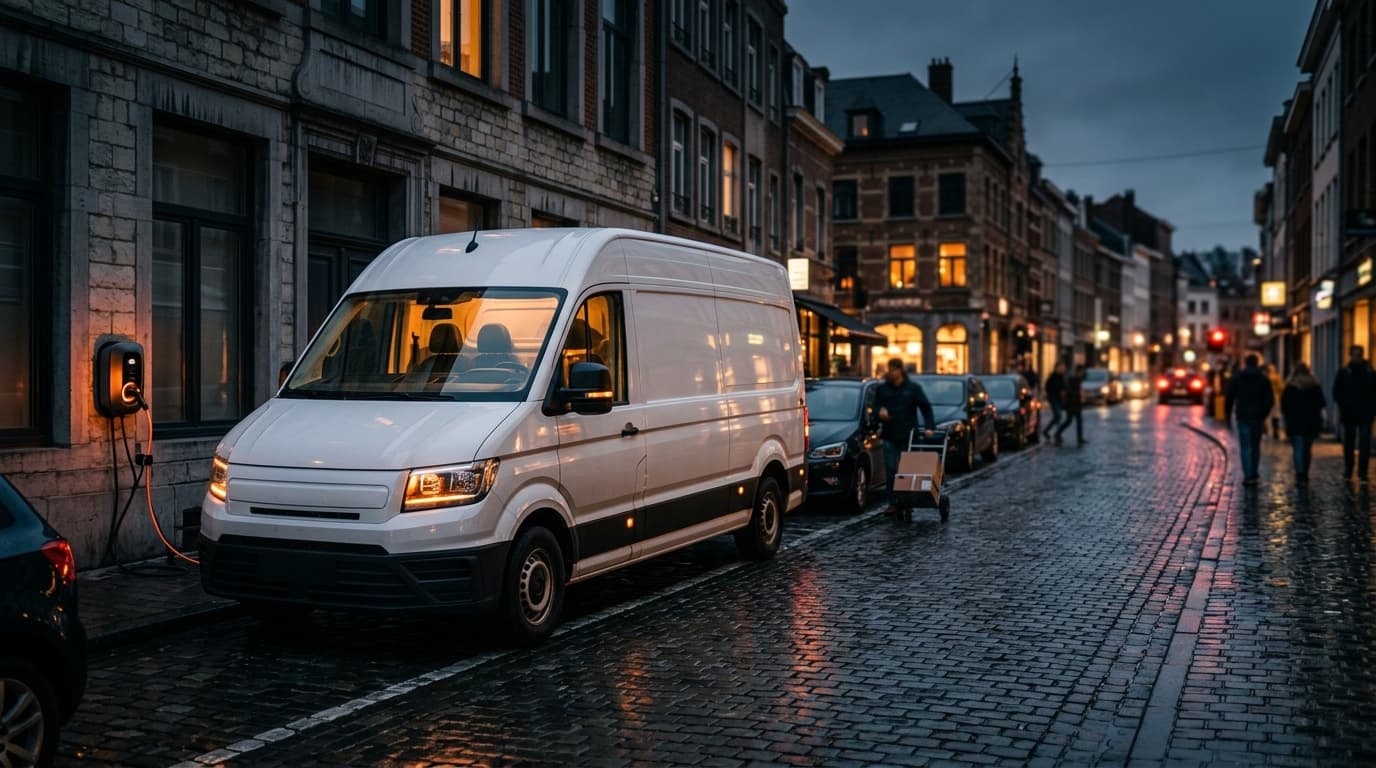
Why does the Fiat Ducato dominate camper conversions?
Because its body is the squarest on the market. Its near-vertical walls free up the widest interior in the segment, the only one that allows a bed laid across the van — the single most decisive space gain in a conversion.
A crosswise bed saves a metre of length compared with a bed along the axis. On a 5.41 m L2H2, that metre changes everything: it becomes a kitchen, a wet room or a proper dining nook. That is why most European low-profile motorhomes are built on a Ducato base, and why Italian and German converters have not moved on in forty years. This is not taste, it is geometry.
That dominance has a pleasant side effect: parts, accessories and conversion kits for the Ducato are everywhere, Belgium included. Roof vents, locker doors, roof racks, pre-cut insulation kits — everything exists in Ducato dimensions, often not in the others. On a Transit or a Sprinter, you cut and adapt more.
What we would avoid: choosing a Sprinter "because it looks better" and discovering when fitting the bed that the missing 6 cm between wheel arches force a lengthwise berth, and a full redraw of the plan. Measure before buying, with a tape, inside the van, doors closed.
L2H2 or L3H2: what size van for a conversion?
L2H2 for mixed daily use, L3H2 if the van becomes your second home. The difference is one metre of usable length — and a clear loss of manoeuvrability in Belgian towns.
The L2H2 measures around 5.40 m and offers 11.5 m³ on a Ducato. It fits a standard parking bay, clears most covered car parks under the 2.60 m gauge (worth re-checking once the roof vent is fitted), and drives without apprehension in Brussels or Liège. For two people, a crosswise bed, a small kitchen and a water point, it is enough.
The L3H2 climbs towards 6 m and unlocks what the L2 cannot give: an enclosed shower cubicle, a rear garage for two bikes or a paddleboard, a four-seat dinette. It is the format professional converters use, and the easiest to resell once finished. But you have to accept the manoeuvres, the refused parking bays and a bit more sail area in crosswinds.
On the Belgian market, the constraint that settles it is often mundane: residential parking. Many Brussels municipalities cap the length of vehicles allowed on the street and ban long-stay parking for vehicles over 6 m. Ask your commune before ordering an L3, not after.
Comparison table: which van for which conversion project?
Here is how the most common bases line up in Belgium, in L2H2 — the reference configuration for a first conversion.
| Base (L2H2) | Load volume | Interior height | Conversion strength | Project profile |
|---|---|---|---|---|
| Fiat Ducato / Peugeot Boxer / Citroën Jumper / Opel Movano | ~11.5 m³ | 1,932 mm | Vertical walls: crosswise bed possible | First van, couple, controlled budget |
| Renault Master (2024 generation) | ~10.8 m³ | ~1,890 mm | High payload, low floor | Heavily loaded van, bulky sports gear |
| Mercedes Sprinter | ~10.5 m³ | ~1,940 mm | Road comfort, rear-wheel drive available | Long trips, mountains, winter use |
| Ford Transit | ~9.5 m³ | ~1,786 mm | Driving manners, dense network | Mixed work / leisure use |
| Volkswagen Crafter | ~10.5 m³ | ~1,930 mm | Trim, driver assistance | Comfortable budget, premium build |
Volumes are manufacturer figures for the L2H2 panel version; heights vary by a few centimetres depending on model year and equipment. Always check on the actual vehicle: two Ducatos of the same year can differ by 2 cm depending on the original floor covering.
To place these same vans outside a conversion context, our best large van in Belgium comparison reviews them on work criteria — payload, VAT, cost per kilometre.
How much payload is left once the van is converted?
Far less than people expect. A full conversion weighs 400 to 700 kg depending on materials: on a 3.5 t van with a kerb weight around 2,130 kg, 1,370 kg is available before the build, so 700 to 950 kg after.
That remainder still has to absorb passengers (2 × 75 kg by convention), fresh water (100 litres = 100 kg), gas, batteries, fridge, bikes, and everything taken along "just in case". You hit the ceiling fast. That is why self-built vans in solid timber, with 18 mm plywood cabinets and an oak worktop, regularly end up overloaded without their owner suspecting it.
Two markers keep you out of trouble. First, weigh the finished van on a public weighbridge, loaded as if leaving on holiday — it is the only figure that counts. Second, arbitrate materials at the design stage: 12 mm poplar plywood instead of 18 mm birch on the upper units saves 40 to 60 kg across a full build, with no change to perceived strength.
Does a camper conversion need homologation in Belgium?
Yes, as soon as the build includes fixed equipment: bed, kitchen, water tank, electrical installation. The vehicle must then be reclassified as category M1 "motor caravan", homologated, and re-registered with the DIV following the procedure of the SPF Mobilité et Transports (Federal Public Service for Mobility and Transport).
The Belgian procedure is prepared, not improvised. Document the build as you go: photos before, during and after, dimensioned plans, and the instruction manuals and homologation sheets of every accessory fitted (heater, gas bottle, roof vent, battery). Furniture and bed fixings get particular scrutiny — a poorly anchored bed becomes a projectile at 90 km/h. Several approved workshops in Belgium handle the file; their fees make sense as soon as the build leaves the standard kit.
The change of category has tax consequences, and not all in the expected direction. A motorhome up to 3,500 kg pays annual road tax of €19.32 per 500 kg bracket, plus a 10% municipal surcharge — roughly €135 a year for a 3.5 t vehicle. Above that, between 3,500 and 3,999 kg, the rate switches to €59.97 + 10%. Uprating a van's gross weight can therefore cut the tax bill while freeing payload. The roadworthiness test and the licence category do not move as long as you stay under 3.5 t.
New or used: what budget for a van to convert?
Recent used almost always wins. A 3 to 5-year-old van has taken the harshest depreciation, its mechanics are known, and the €12,000 to €18,000 saved go into the build — where you see them every day.
Belgian markers from summer 2026 give the measure. A new Ducato L1H1 120 hp at 3 t with a manual gearbox starts around €30,650 ex-VAT; an L3H2 at 3.5 t in 140 hp sits near €41,000 ex-VAT; the top L4H3 180 hp automatic climbs to €43,050 ex-VAT. Add 21% VAT, non-recoverable for a private buyer: the L3H2 goes from €41,000 to nearly €49,600 in real money. The electric E-Ducato starts at €44,790 ex-VAT — relevant for an urban van living in a low-emission zone, much less so for driving to Croatia.
Used, count €15,000 to €25,000 for a 3 to 5-year-old Euro 6 diesel L2H2 or L3H2 with 80,000 to 150,000 km, depending on body condition. Mileage matters less than usage: an ex-fleet motorway van at 150,000 km often has healthier mechanics than an urban delivery vehicle at 70,000 km that spent its life on cold starts. Look at the floor, sills, chassis rails and service history before anything else — our criteria for a reliable used van apply as they are.
At resale, a cleanly converted and M1-homologated van sells better than a bare van of the same age: the build work holds value, provided it is finished and documented. A half-finished van with cables hanging and no paperwork sells at bare-van price, minus the discount for the hole cut in the roof.
Our verdict
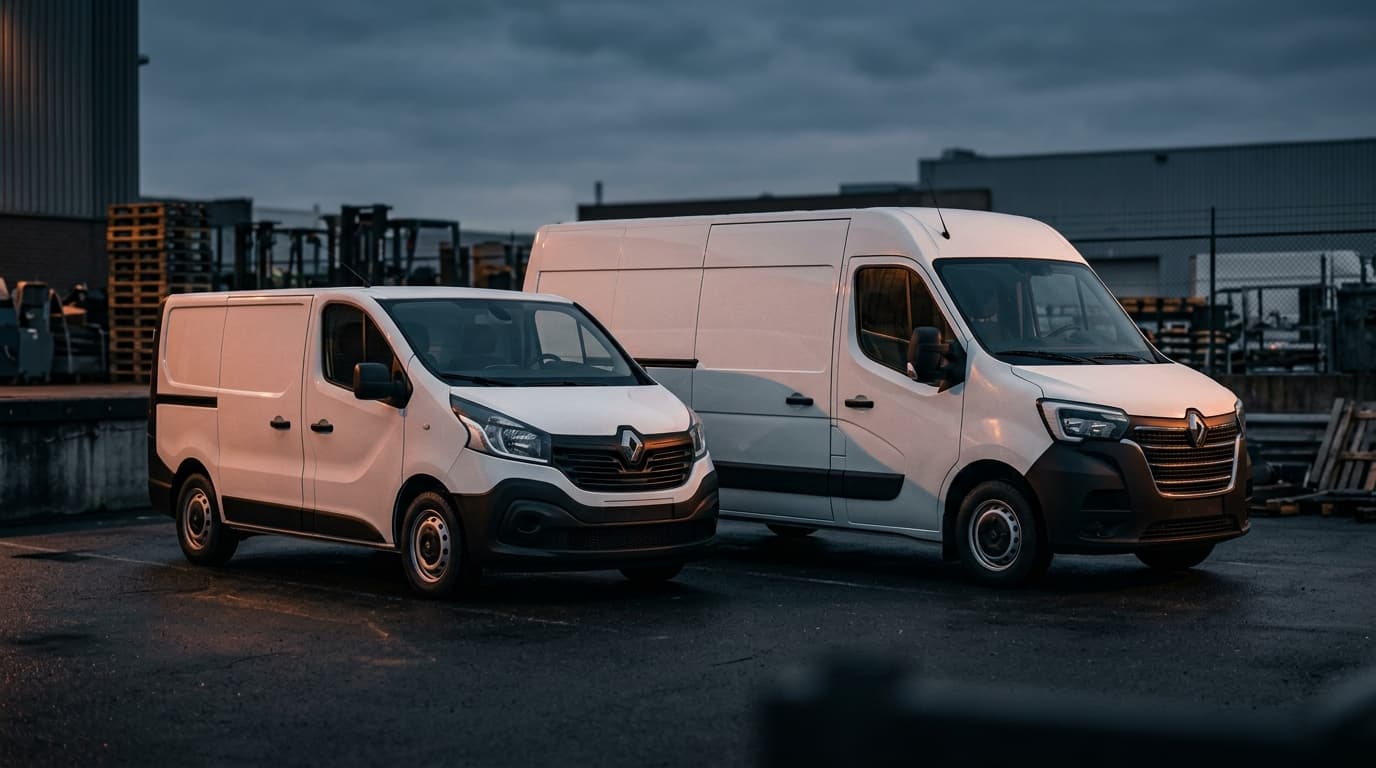
There is no best van to convert in absolute terms, but there is one base that makes the project simpler: the Ducato and its twins, for their square body and crosswise bed. The Sprinter and Crafter earn their keep if you drive far and often, the Master if you load heavy, the Transit if the van also works for a living.
Three reflexes head off most of the bad surprises: measure interior height and width on the actual vehicle before buying, keep at least 500 kg of payload after the build, and prepare the M1 homologation file alongside the conversion, not after it. The rest — the wood tone, the brand of the stove — can be fixed on a Sunday. To place this project against the wider market, our guide to vans in Belgium sets the segment benchmarks.
Sources: SPF Mobilité et Transports (Federal Public Service for Mobility and Transport), "Registering a motor caravan, camper or motorhome" (DIV procedure, category M1); Moniteur Automobile, "Motorhomes: which road taxes?" (€19.32 per 500 kg and €59.97 above 3,500 kg, plus 10% municipal surcharge); Fiat Professional Belgium (Ducato and E-Ducato ex-VAT prices, summer 2026); Utilitaire Magazine (L2H2 load volumes: Ducato 11.5 m³, Master 10.8 m³, Sprinter 10.5 m³, Transit 9.5 m³); AutoScout24 Belgium (converted vans and used values); FEBIAC (light commercial vehicle registrations, first half of 2026: 37,455 units, -4.9%); Brussels Environment (low-emission zone, January 2026).
Grands fourgons comparator
Compare all grands fourgons side by side.
Compare now →
Frequently asked questions

Damien, 44 ans, a géré pendant douze ans la flotte d'utilitaires d'une PME de second œuvre dans la région de Namur : achats, entretien, revente, et les galères de carrosserie qui vont avec. Il a vu passer des dizaines de Trafic, Transporter et Master, et il sait ce qui casse, ce qui se revend bien et ce qui coûte cher à l'usage. Il a lancé ce site pour comparer les utilitaires sur ce qui compte vraiment en Belgique : charge utile réelle, volume utile, TVA récupérable et coût au kilomètre — pas la brochure du concessionnaire.